Neighbourhood picks
Backwater Suite Rooms in Kochi: Best Hotels with Private Water Views 2026
Wake up to still water and canoe trails from your own balcony or terrace in Fort Kochi, Kumbalangi and Vypeen Island—where backwater suites beat houseboat clichés with ceiling fans, kingsize beds and actual plumbing.
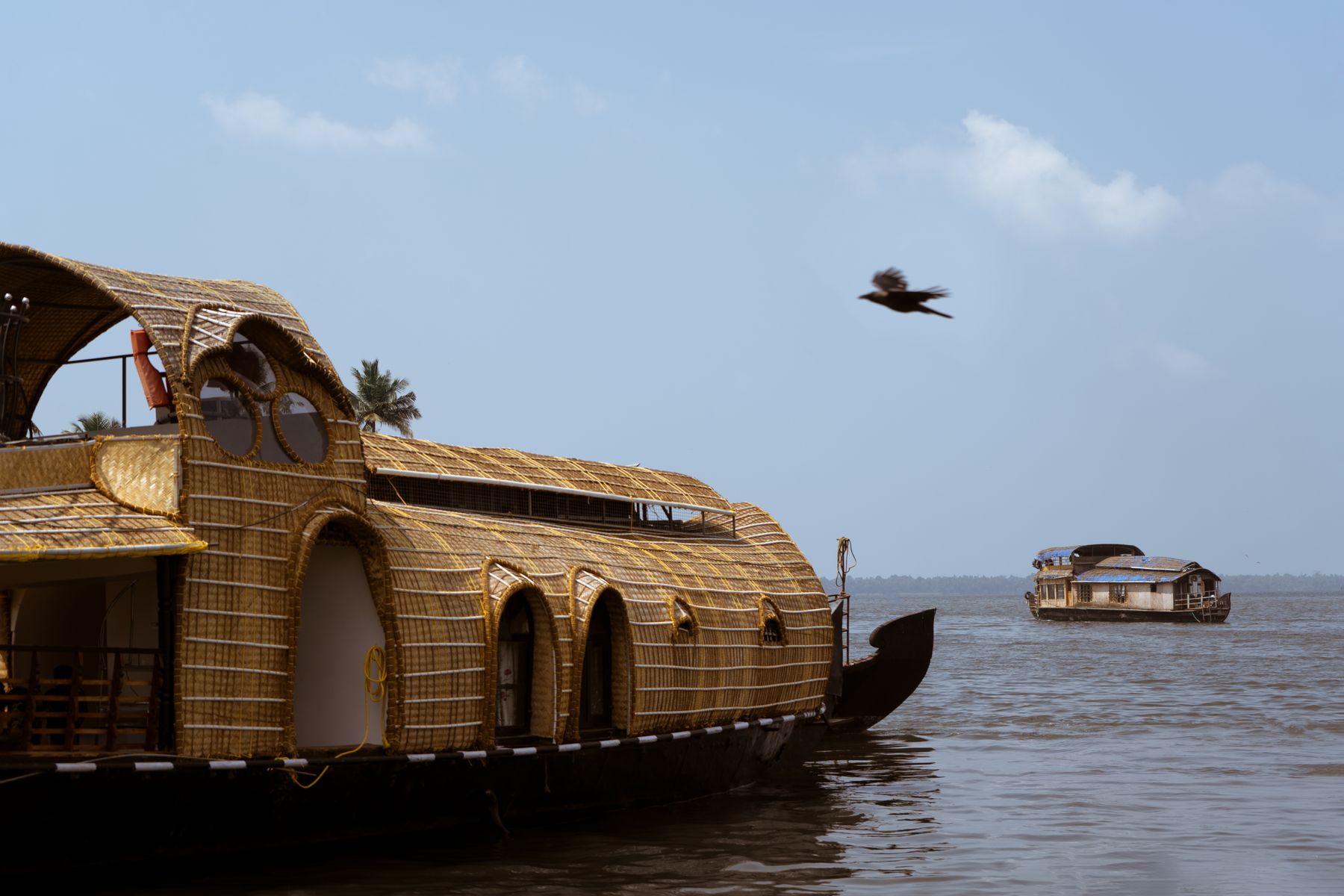
Why a backwater suite beats a houseboat for most visitors
Houseboats sound romantic until you spend fourteen hours on teak floorboards with a diesel generator rumbling underneath your pillow and discover the toilet is a bucket affair that someone empties at dawn. A backwater suite in Kochi gives you the view and the breeze—egrets fishing at sunrise, kingfishers diving from coconut palms, canoes gliding past your veranda—but you also get hot water, air conditioning you can actually regulate, a proper mattress, and room service that doesn't involve a cook crouching over a kerosene stove two metres from your head. The best suites sit on narrow spits of land in Kumbalangi, Vypeen Island and the lagoon edge of Fort Kochi, where tidal channels are narrow enough to hear oars creak and wide enough that you're not staring at someone's washing line. You pay between ₹6,500 and ₹18,000 a night depending on whether you want heritage carved-wood furniture or just a clean modern room with uninterrupted water on three sides, but either way you can leave for the city in twenty minutes, eat dinner somewhere that isn't your hotel, and come back to silence and stars.
The geography matters more than the brochure photos. Suites facing the Vembanad Lake backwaters near Aroor or Varapuzha give you open horizons and sunset colours that run pink to charcoal, but you sacrifice proximity to Fort Kochi's cafés and the Mattancherry spice lanes. Suites on the canals around Kumbalangi and Cherai put you inside the working backwaters where prawn farmers pole harvest baskets and school ferries chug past at seven in the morning, but the water is narrower and browner. Vypeen Island splits the difference: lagoon channels wide enough for cargo boats, close enough to Ernakulam that an Uber costs ₹250, and emptier than Fort Kochi so you don't hear tour groups at breakfast. If you arrive in Kochi between November and February the water is high and still, the heat is merely persistent rather than murderous, and early morning mist sits on the channels until eight. March to May the water drops, mud banks appear, and you will spend your entire stay damp with sweat despite the ceiling fan.
Top backwater suite properties along the Vypeen and Kumbalangi channels
On Vypeen Island the best water-facing rooms sit along Njarakkal and Elamkunnapuzha, where the Cochin Backwater Resort and a handful of smaller guesthouses have built wooden cottages and tile-roof suites on narrow strips between the Ernakulam-Azhikode canal and paddy fields. The resort's deluxe suites cost around ₹9,800 in high season and come with private sit-outs cantilevered over the canal, wide enough for two cane chairs and a low table where you can drink filter coffee and watch country boats loaded with coconuts head toward the Goshree bridges. The rooms themselves are plain—tile floors, dark wood beds, small bathrooms with granite counters—but the location is faultless. You're fifteen minutes by car from the Vypeen ferry terminal, forty minutes from Fort Kochi if the bridges are clear, and far enough from the city that the only sounds after nine at night are frogs and the occasional outboard motor. Cheaper options exist along the same stretch: family-run homestays with one or two waterfront rooms charge ₹4,500 to ₹6,000, breakfast included, though you sacrifice the pool and the restaurant. Book direct rather than through aggregator apps if you can; owners here still check email and will often knock ₹500 off if you're staying three nights.
Kumbalangi village, twenty minutes south of the Goshree bridges, offers a different texture. The backwaters here are narrower, winding, lined with nipa palms and houses on stilts, and the tourism model leans community-run rather than resort-corporate. The Kumbalangi Integrated Tourism Village has a handful of certified homestays with waterfront suites, rooms priced around ₹5,500 to ₹7,200 that include guided canoe trips and cooking demos with toddy-shop uncles who will teach you to de-shell crabs with your thumbs. The rooms are simpler—painted concrete, basic furniture, ceiling fans that rattle—but you wake to the sound of Chinese fishing nets being winched down and fishermen selling the morning catch from canoes. The trade-off is authenticity for comfort: if you need a gym, a spa or a wine list, stay elsewhere. If you want to feel like the only tourist in a working backwater village where kids wave from the ferry and you can walk to a toddy shop that's been operating since 1947, Kumbalangi is unmatched. The drive to Fort Kochi takes thirty-five minutes via the Aroor road, longer if you hit the Kundannur junction at rush hour, but that distance is exactly why the water stays quiet.
Fort Kochi lagoon-edge suites: heritage buildings with private boat docks
Fort Kochi itself has limited true backwater frontage—most heritage hotels face narrow lanes or the Arabian Sea—but a few properties on the southeastern edge near Kumbalangi Road and the Vembanad Lake shoreline have suites that open directly onto tidal lagoons. The Old Courtyard and Xandari Pearl are the names that come up when you filter for water views and colonial-era bones. The Old Courtyard's lagoon suites cost around ₹13,500 in peak season and occupy a restored Dutch-period villa with lime-washed walls, antique four-poster beds and private verandas that hang over a narrow channel connecting to the lake. You can arrange a canoe pickup from the hotel's private dock and paddle to Vypeen in twenty minutes, or just sit and watch the tide come in over the mudflats. The rooms have air conditioning, rain showers and Bluetooth speakers, which feels incongruous against the weathered teak beams and cadjan ceilings but makes life liveable in April. Breakfast is South Indian and European, served on the veranda under a frangipani tree, and the staff will pack you a thermos of coffee if you want to catch sunrise from the dock.
Xandari Pearl, closer to Bolgatty Island, is newer construction designed to look old—wooden shutters, sloping tile roofs, carved door frames—but the backwater suites deliver. Rooms start at ₹11,200 and sit in a row along a lagoon arm that fills with houseboats during the day and empties by six in the evening when they motor back to the jetty. The compromise is that you get boat traffic and diesel fumes until dusk, but after that the water goes silent except for the occasional night fisherman with a kerosene lamp. The suites themselves are generous: separate sitting areas, bathtubs facing the water through louvred windows, and balconies with daybeds wide enough to nap on. The hotel operates its own houseboat, so if you must tick that box you can book a four-hour lunch cruise without the overnight commitment, then return to your suite with working Wi-Fi and a bed that doesn't smell like old rope. Fort Kochi's core—the Chinese fishing nets at Vasco da Gama Square, the spice warehouses on Bazaar Road, Kashi Art Café—is a ₹150 auto-rickshaw ride or a twenty-minute walk through Jew Town.
What to expect from backwater suites: amenities, views and practical realities
Every hotel claims a water view, but not every water view is equal. Suites facing the main Vembanad Lake channels get big skies, passing cargo ships and spectacular sunsets, but you also get engine noise and the occasional loudspeaker from a tour boat blasting Malayalam film songs. Suites on narrow canals and tributary channels are quieter and more intimate—you can identify individual bird calls and watch crabs climbing the bank—but the water can look stagnant in the dry season and you might see plastic bottles caught in the reeds. The best compromise is a room that opens onto a medium-width canal with some current, ideally with coconut palms or casuarina trees on the opposite bank to soften the sightline and give the herons somewhere to roost. Private balconies or terraces matter more than room size; a small suite with a deep veranda where you can sit in the dark and listen to the water is worth more than a vast air-conditioned box with a porthole window.
Amenities vary wildly. Higher-end properties include kayaks or canoes you can take out yourself, early-morning birdwatching walks with a naturalist who knows the difference between a brahminy kite and a black kite, and Ayurvedic massage rooms with water views. Budget and mid-range places offer breakfast, a resident cat and not much else, which is fine if you plan to spend your days exploring Kochi and only need the room for sleeping and sunrise coffee. Ask about air conditioning versus fans before you book; some heritage suites have AC units that roar like helicopter rotors and ruin the point of being near water. Mosquitoes are a given from June to September and again in October; bring your own repellent because hotel-supplied coils often run out. Hot water is usually solar-heated, which means it's scalding at noon and lukewarm by nine at night if twenty other guests have showered first. The wi-fi will be slow, the power will cut out during thunderstorms, and your phone will not get a signal in some of the more remote Kumbalangi properties. If that sounds like a problem rather than a feature, book a city hotel and take a backwater day cruise instead.
How to choose between Fort Kochi, Vypeen and Kumbalangi for your base
Fort Kochi makes sense if you want backwater mornings and city evenings without changing hotels. You can walk to the Parade Ground, the Dutch Cemetery and Mattancherry Palace, eat dinner at Oceanos or Teapot, and still wake up to water and bird calls. The downside is that true waterfront suites are scarce and expensive, and you're sharing Fort Kochi with cruise-ship crowds from December to March. Vypeen Island gives you better value and bigger water views but adds travel time: figure thirty to forty-five minutes each way if you want to visit Fort Kochi, longer if the Goshree bridges are jammed or you're relying on the slow government ferry from Ernakulam. It's the right choice if you prioritise the room over the neighbourhood, if you have a rental car or don't mind Uber bills, and if you're happy eating most meals at your hotel or in the small roadside joints near Njarakkal that serve karimeen fry and appam.
Kumbalangi is for travellers who want immersion and can tolerate rough edges. The backwater experience is the most genuine—this is where Kochi locals go when they want to escape the city—but infrastructure is minimal. There's no ATM in the village, the nearest pharmacy is a fifteen-minute drive, and if you want a glass of wine with dinner you'll need to bring your own bottle because most homestays don't have a liquor licence. The roads flood during the monsoon, and auto-rickshaws sometimes refuse the fare because the route is too muddy. But if you're the kind of traveller who would rather watch a fisherman mend nets than visit another museum, and if you can handle squat toilets and bucket baths in a pinch, Kumbalangi will give you backwater memories that actually feel earned. Whichever area you pick, plan on two nights minimum; one night is barely enough to adjust to the slower rhythm, and you'll spend half your time packing and unpacking rather than sitting on your balcony doing nothing, which is the entire point of renting a backwater suite in the first place.
Booking direct, seasonal pricing and what to avoid
Prices fluctuate dramatically by season. November to February is peak, with rooms costing thirty to forty percent more than the April to September low season, and availability tightening around Christmas and New Year when you'll need to book at least eight weeks ahead. March is shoulder season—still warm but not yet brutal, rates dropping, fewer crowds—and often the sweet spot for value. The monsoon months from June to August bring the lowest prices, ₹4,000 for suites that cost ₹9,000 in December, but you gamble on weather; some years the rain is romantic and intermittent, other years it's relentless grey curtains and you won't see the backwaters at all through the mist. September and early October are muggy and unpredictable but can be beautiful if you time it between downpours, and the water levels are at their highest so the channels look lush and full.
Book directly with smaller properties when possible. Many family-run guesthouses and boutique hotels in Vypeen and Kumbalangi list their rooms on aggregator sites but prefer direct bookings because they avoid the commission. Email or WhatsApp the property, mention you found them through a search, and ask if they offer a direct-booking rate; you'll often save ₹500 to ₹1,200 per night, and the owner will remember you and upgrade you if a better room is available. Avoid properties that describe themselves as resorts but are actually houseboat operators with a few land-based rooms as an afterthought; the rooms are usually an add-on and get the worst locations and the least maintenance. Read recent reviews specifically mentioning the water view, because some hotels photograph their best suite from the most flattering angle and then assign you a room that technically faces water but through a gap in the trees fifty metres away. If a hotel listing shows only one photo of the backwater and twelve photos of the buffet breakfast, that tells you what they're prioritising.
Good to know
Questions, answered
Do I need a car to stay in a backwater suite outside Fort Kochi?
Not essential but highly convenient. Vypeen and Kumbalangi are reachable by auto-rickshaw and local ferries, but schedules are infrequent and drivers sometimes refuse longer fares late at night. If you plan multiple trips into Fort Kochi or Ernakulam, a rental car costs around ₹2,200 per day with driver and saves frustration. Uber and Ola work but availability drops after dark in remote areas.
Are backwater suites safe during the monsoon season?
Generally yes, though flooding can happen in low-lying areas like Kumbalangi during heavy June or July rains. Most established hotels are built on slightly elevated ground and have weathered dozens of monsoons without issue. Check with your property about access roads; some become impassable for a day or two after major downpours, which can complicate arrivals and departures.
Can I swim in the backwaters from my hotel?
Technically possible but not advisable. The water in most canals and lagoons around Kochi is brackish, slow-moving and used by local communities for washing and fishing. Pollution levels vary but are generally not safe for swimming. Some resorts have pools overlooking the backwaters, which gives you the view without the risk. If you want to swim in natural water, head to Cherai Beach on Vypeen Island instead.
How far in advance should I book a backwater suite for December or January?
At least two months for mid-range properties, three months for high-end heritage suites in Fort Kochi. Christmas and New Year are the busiest dates and often sell out by October. February is also tight due to the Cochin Carnival and several Christian feast days. If you're flexible on dates, the first week of December and late January after the 26th offer slightly better availability and occasional rate drops.
What's the best time of day to enjoy the backwater view from my room?
Early morning between six and eight, when the light is soft, the water is still, and local boat traffic is just starting. Fishermen and commuters create gentle activity without noise. Late afternoon from four-thirty to sunset is the second-best window, especially November to February when the sun drops behind the palms and the water turns gold. Midday is harsh and bright, and the heat empties the channels of life.
Doing good is the business
Every booking in Kochi removes one tonne of CO₂
Same hotel, same room, same live price you would pay anywhere else — IMPT funds one verified tonne of carbon removal per stay, never added to your bill.